If you are wondering how to wash a car properly, the safest process is to rinse off loose dirt first, clean the wheels and tires, wash the car from top to bottom with car wash soap and a wash mitt, rinse each section thoroughly, dry with microfiber towels, and finish with wax or paint protection when needed.
At Love My Car Car Wash & Detail Center, I know washing your car sounds simple. Grab soap, spray water, scrub, rinse, done. Easy, right?
Almost. The way you wash your car matters. The wrong soap, dirty towels, direct sunlight, one dirty bucket, or scrubbing too hard can leave swirl marks, water spots, or dull paint. The right process helps protect your car’s body, clear coat, rubber seals, wheels, tires, glass, and overall shine.
As a family-owned, full-service car wash in Germantown, Maryland, we help drivers keep their vehicles clean, protected, and looking their best without the guesswork.
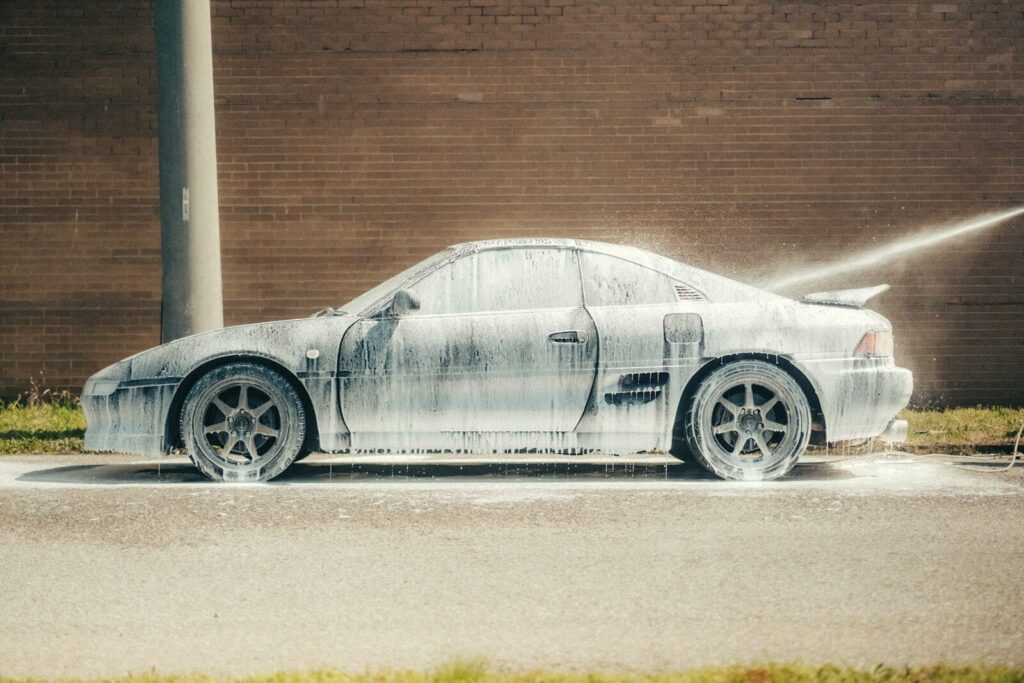
Photo by Matt Reiter on Unsplash
Why Does Car Washing Matter?
Car washing matters because dirt, road salt, bird droppings, tree sap, brake dust, and environmental debris can sit on your car’s surface and affect the finish over time. Regular washing helps protect the paint, improve appearance, and make the vehicle easier to maintain.
A proper wash can help remove:
- Loose dirt
- Road salt
- Dust
- Mud
- Brake dust
- Bird droppings
- Tree sap
- Dead bugs
- Pollen
- Water spots
- Dirt and debris from lower panels
A clean car is not just about looking good. It is part of practical vehicle care.
Why Washing Your Car Properly Matters
Washing your car properly matters because poor technique can damage the paint while you are trying to clean it. Dirt, sand, and grit can act like tiny abrasives if they are dragged across the car’s body.
Common damage from poor washing may include:
- Swirl marks
- Fine scratches
- Water spots
- Dull paint
- Streaky glass
- Wax removal
- Dirty wheels that stay stained
- Missed grime around wheel wells and rocker panels
A good wash process protects the surface while removing buildup. That is the whole point.
At Love My Car, I always want customers to understand that a car wash should clean and protect, not just make the car wet and soapy.
How Often Should You Wash Your Car Regularly?
You should wash your car regularly, usually every one to two weeks, depending on weather, driving habits, and where you park. Germantown drivers may need to wash more often during winter salt season, spring pollen season, after rain, or after parking under trees.
Wash sooner if you notice:
- Bird droppings
- Tree sap
- Road salt
- Heavy dust
- Mud
- Bug buildup
- Brake dust
- Dirty windows
- A rough feel on the paint
- Stains on the car’s surface
If your car is parked outside, driven daily, or used for work, family errands, rideshare driving, or long commutes, regular washing helps maintain both appearance and value.
What Supplies Do You Need To Wash A Car?
To wash a car safely at home, you need the right supplies. Using random household items can create more harm than good.
A basic car washing setup includes:
- Car wash soap or car shampoo
- Wash bucket
- Rinse bucket
- Grit guard
- Wash mitt
- Wheel cleaner
- Wheel brush or scrubbing brush
- Hose or pressure washer
- Microfiber towels
- Microfiber cloth
- Glass cleaner
- Drying aid, if preferred
- Wax or protection product
- Tire shine, if desired
- Fresh water
The products matter, but the process matters just as much. Even good products can cause bad results if dirty towels or poor technique are used.
Why Should You Use Car Wash Soap Instead Of Dish Soap?
You should use car wash soap because it is designed for automotive paint, clear coat, wax, rubber seals, trim, and glass. Dish soap, laundry soap, and household cleaners can be too harsh for your car’s surface.
Car wash soap helps:
- Lift dirt safely
- Create slick soapy water
- Reduce friction
- Protect existing wax
- Rinse cleanly
- Maintain shine
- Make the job easier
A good car shampoo gives your wash mitt the lubrication it needs to glide over the paint instead of dragging grit across it.
If you care about your car’s finish, start with soap made for cars.
How Do You Remove Loose Dirt Before Washing?
To remove loose dirt, rinse the entire car before touching it with a wash mitt. This step helps remove dirt and debris that could scratch the paint during washing.
Start with a strong rinse from the top down. Focus on:
- Roof
- Windows
- Hood
- Trunk
- Doors
- Rocker panels
- Wheel wells
- Wheels and tires
- Front bumper
- Rear bumper
Loose dirt is the enemy of a clean, safe wash. If you skip the rinse and start scrubbing right away, you may drag dirt across the car’s surface.
That is how swirl marks happen.
Why Are Microfiber Towels Better For Drying?
Microfiber towels are better for drying because they are soft, absorbent, and less likely to scratch the paint when they are clean and used properly. Old bath towels, rough rags, or dirty cloths can leave marks behind.
Use microfiber towels for:
- Drying paint
- Wiping glass
- Buffing wax
- Cleaning interior surfaces
- Removing detail spray
- Touching up small areas
Keep towels separated by job. Do not use the same towel on wheels and paint. Wheels are often the dirtiest part of the car because they collect brake dust, grime, and road debris.
A clean towel is part of a clean result.
Should You Use A Two Bucket Method?
The two bucket method is a safer DIY washing technique that uses one bucket for soapy water and another rinse bucket for cleaning the wash mitt. This helps keep dirt out of the soap bucket.
Here is how it works:
- Dip the wash mitt into the soapy water.
- Wash one panel.
- Rinse the dirty mitt in the rinse bucket.
- Rub it against the grit guard if you have one.
- Dip it back into the soap bucket.
- Continue washing section by section.
Using only one bucket can put dirt back onto the wash mitt. That dirt can then scratch the paint.
The two bucket method takes a little more time, but it helps protect the finish.
How Does A Foam Cannon Help With Car Washing?
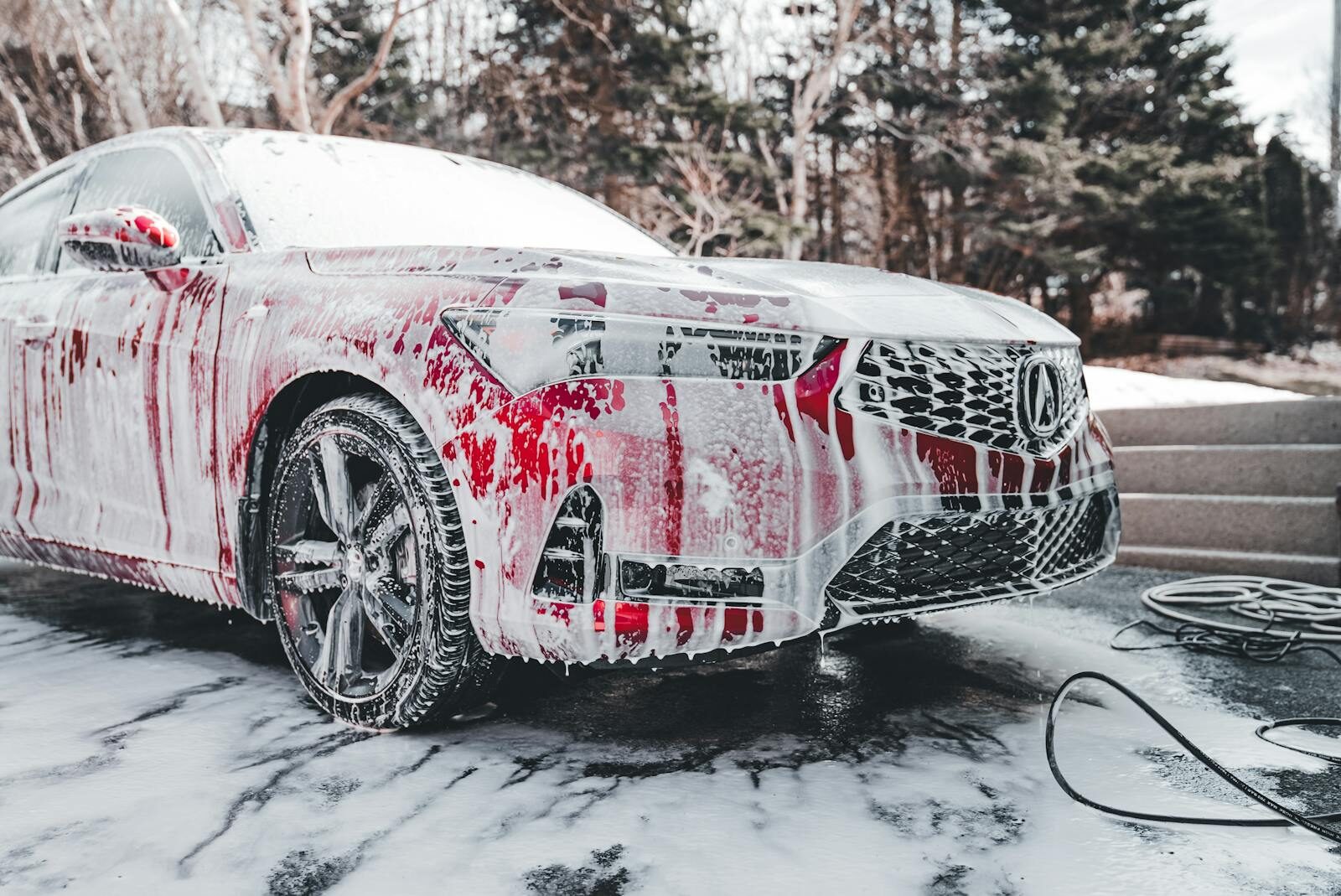
A foam cannon can help cover the car’s surface with thick soap before hand washing. The foam helps loosen dirt and adds lubrication before the wash mitt touches the paint.
A foam cannon is often used with a pressure washer or power washer. It can be helpful for:
- Pre wash steps
- Loosening grime
- Softening stubborn dirt
- Reducing friction
- Covering the entire car evenly
- Making washing more efficient
Foam does not replace hand washing when dirt is heavy, but it can make the process safer and easier.
If you use one, still rinse first, work carefully, and avoid letting soap dry on the paint.
Can A Pressure Washer Damage A Car?
A pressure washer can help rinse a car quickly, but it can cause damage if used too closely, too aggressively, or on delicate areas. High pressure near rubber seals, chipped paint, decals, convertible tops, sensors, or damaged trim can create problems.
Use care around:
- Rubber seals
- Mirrors
- Emblems
- Loose trim
- Convertible tops
- Rock chips
- Damaged paint
- Door edges
- Window seals
- Older vehicles
A pressure washer should remove dirt, not blast the car like you are cleaning a sidewalk. Big difference. Tiny chaos, huge consequence.
Professional car washes use controlled equipment and processes designed for vehicles, which helps reduce the guesswork.
How Should You Clean Wheels And Tires?
To clean wheels, start with the wheels and tires before washing the car’s body. Wheels and tires are usually the dirtiest part of the vehicle because they collect brake dust, grime, road salt, and dirt.
A basic wheel cleaning process includes:
- Rinse the wheels and tires.
- Apply wheel cleaner.
- Let it soak according to product instructions.
- Scrub with a dedicated wheel brush.
- Clean wheel wells if needed.
- Rinse thoroughly.
- Dry with a separate towel.
- Apply tire shine if desired.
Do not use your paint wash mitt on the wheels. Keep wheel tools separate so brake dust does not end up on the car’s body.
How To Wash A Car Step By Step
Here is the simple step-by-step process for washing a car properly.
Step 1: Park In The Right Place
Park in shade if possible. Avoid direct sunlight because soap and water can dry too quickly, leaving water spots.
Also avoid sudden temperature changes. For example, do not spray very cold water on a hot surface that has been sitting in the sun.
Step 2: Gather Your Supplies
Before you start, make sure your car wash soap, buckets, wash mitt, microfiber towels, hose, wheel cleaner, and drying products are ready.
Once the car is wet, you do not want to stop and search for supplies.
Step 3: Rinse The Car
Rinse the car from top to bottom with fresh water. This removes loose dirt before you touch the paint.
Pay attention to lower panels, wheel wells, and rocker panels because dirt collects there quickly.
Step 4: Clean The Wheels And Tires
Use wheel cleaner, a brush, and dedicated towels. Clean wheels before washing the paint so dirty splashback does not land on a freshly washed surface.
Step 5: Wash One Panel At A Time
Use car wash soap and a clean wash mitt. Wash one panel at a time from top to bottom. Rinse the mitt often.
Start with cleaner upper areas and save the dirtiest lower areas for last.
Step 6: Rinse Each Section
Do not let soap dry on the car’s surface. Rinse each section as you go, especially on warm days.
Step 7: Check For Stubborn Dirt
If stubborn dirt, bird droppings, or tree sap remains, do not scrub aggressively. Soak the affected area and use the right cleaning products.
Scrubbing hard can damage the paint.
Step 8: Final Rinse
Rinse the entire car again to remove leftover soap.
Make sure you rinse around:
- Mirrors
- Door handles
- Emblems
- Window trim
- Wheels
- Tires
- Rocker panels
- Bumpers
Step 9: Dry With Microfiber Towels
The drying process matters. Use clean microfiber towels and gently dry the vehicle before water droplets turn into water spots.
Step 10: Apply Wax Or Protection If Needed
If the paint feels clean and dry, apply wax or protection according to the product instructions. Do not let wax sit longer than recommended.
Wax helps protect the paint and improve shine.
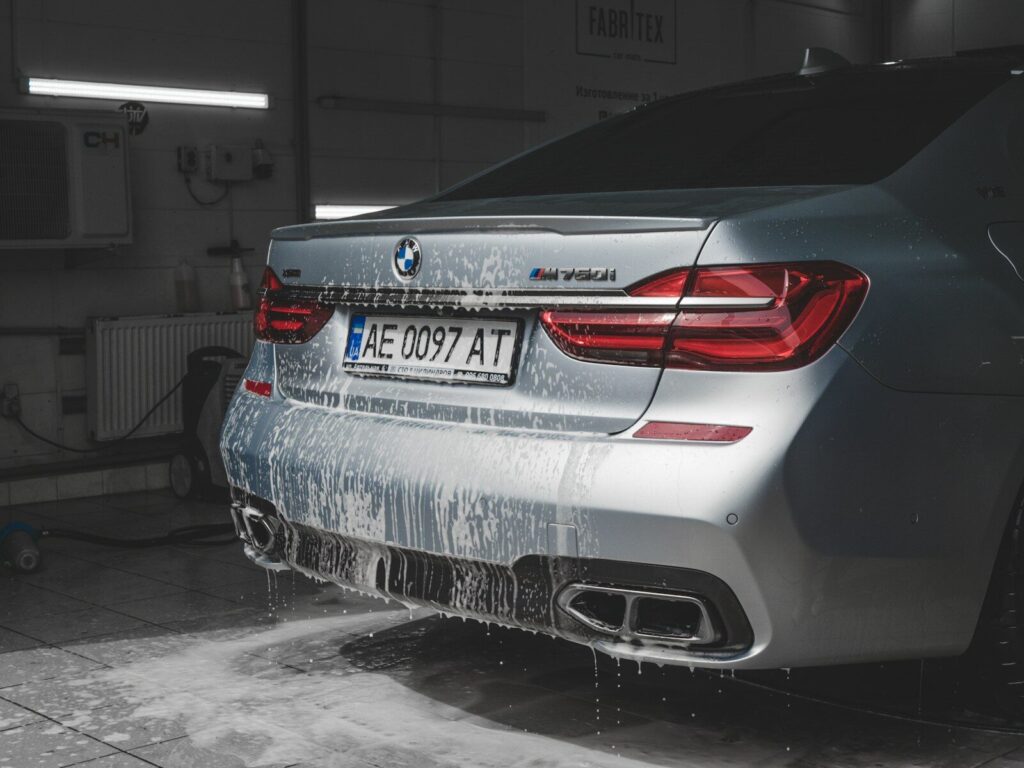
Photo by Vladyslav Lytvyshchenko on Unsplash
How Do You Handle Bird Droppings And Tree Sap?
Bird droppings and tree sap should be removed as soon as possible because they can stick to the paint and cause lasting damage if ignored. Bird droppings can be acidic, and tree sap can harden on the surface.
To remove them safely:
- Soak the affected area first.
- Use car-safe cleaning products.
- Avoid aggressive scrubbing.
- Use a microfiber cloth.
- Rinse thoroughly.
- Wash the area again if needed.
- Add wax or protection afterward.
If the mark does not come off easily, professional detailing may be safer than forcing it.
How Do You Prevent Water Spots During The Drying Process?
To prevent water spots, avoid washing in direct sunlight, rinse thoroughly, and dry the car quickly with clean microfiber towels. Water spots form when water droplets dry and leave minerals behind.
Tips to prevent water spots:
- Wash in shade when possible
- Use clean water
- Rinse well
- Dry right away
- Use a drying aid if desired
- Do not let the car air dry
- Work one panel at a time in warm weather
If water spots are already on the paint or glass, detailing may help remove or reduce them.
What Is The Best Way To Keep A Clean Car Looking New?
To keep a clean car looking like a new car longer, wash it regularly, remove contaminants quickly, dry it properly, and add protection with wax or ceramic coating.
A good routine includes:
- Washing every one to two weeks
- Removing road salt quickly
- Cleaning bird droppings right away
- Washing after heavy pollen
- Drying with microfiber towels
- Cleaning wheels and tires
- Vacuuming the interior
- Protecting paint with wax or ceramic protection
- Scheduling professional detailing when needed
A new car looks great because the paint is clean, glossy, and protected. The goal is to keep that feeling going as long as possible.
Do Convertible Tops Need Special Care?
Convertible tops need special care because they are not the same as painted metal panels. Fabric and vinyl tops can require specific cleaning products and gentler techniques.
Before washing a convertible, check the owner’s manual or manufacturer recommendations.
Be careful with:
- High-pressure water
- Harsh scrubbing
- Strong chemicals
- Stiff brushes
- Automatic equipment if the top is damaged
- Rubber seals around the roof
- Rear windows on soft tops
If the convertible top is older, leaking, torn, or loose, ask a professional before washing it aggressively.
How Does Road Salt Affect Your Car?
Road salt can stick to your paint, wheels, tires, wheel wells, rocker panels, and underside. If left too long, it can contribute to rust and corrosion.
This is why winter washing matters so much in Maryland.
After snow or icy weather, try to wash your car as soon as weather permits. Pay extra attention to the lower body panels and wheel areas because salt collects there.
A professional wash can make winter maintenance much easier, especially when it is too cold to wash in the driveway.
What Are Common Car Washing Mistakes?
Common car washing mistakes include using dish soap, washing in direct sunlight, scrubbing dry dirt, using dirty towels, letting the car air dry, and forgetting the wheels.
Avoid these mistakes:
- Using one bucket for everything
- Skipping the rinse
- Using dish soap
- Washing in direct sunlight
- Scrubbing in circular motion with dirty tools
- Using rough towels
- Letting soap dry
- Letting water air dry
- Using wheel towels on paint
- Ignoring rocker panels
- Forgetting wheel wells
- Skipping wax or protection
- Using too much pressure with a power washer
The biggest rule is simple: do not drag dirt across the paint.
When Are Professional Car Washes Better?
Professional car washes are better when you want consistent results, controlled equipment, proper cleaning products, strong rinse coverage, water pressure control, tire cleaning, interior options, and paint protection without doing the work yourself.
A professional wash is helpful when:
- Your car is very dirty
- Road salt has built up
- You do not have the right tools
- You do not have time
- You want wax or ceramic protection
- You want tire shine and wheel cleaning
- You want interior cleaning too
- You want to avoid DIY mistakes
- You wash often and need convenience
At Love My Car, we make car care easier for busy drivers who want better results without spending their weekend with a bucket and hose.
How Does Love My Car Help Protect Your Vehicle?
At Love My Car Car Wash & Detail Center, we help Germantown drivers keep their cars clean, protected, and comfortable year-round. We offer wash packages and detailing services designed for different needs, budgets, and vehicles.
Our services include:
- Full-service car wash options
- Bronze, Silver, Gold, and Diamond wash packages
- Exterior washing
- Interior detailing
- Tire shine
- Rim cleaner
- Odor removal
- Waxing
- Ceramic protection
- Headlight restoration
- Unlimited wash memberships
- Multi-vehicle discounts
Whether you drive a commuter car, family SUV, work truck, rideshare vehicle, or weekend favorite, we are here to help you maintain it.
Why Choose Love My Car In Germantown?
Love My Car is family-owned, community-focused, and built around a feel-good car wash experience. I believe a clean car should feel like a little reset in your day.
You can wash at home, and when done properly, that can help maintain your vehicle. But professional washing gives you the right equipment, water pressure control, cleaning products, and protection options in one convenient place.
That means less mess in your driveway and better peace of mind for your car.
Keep Your Car Clean The Right Way
Learning how to wash a car properly helps protect your paint, prevent swirl marks, remove dirt and debris, and maintain your vehicle’s shine. Start with a rinse, use car wash soap, wash from top to bottom, clean wheels separately, dry with microfiber towels, and protect the paint with wax or ceramic protection when needed.
And when you want a clean car without the DIY hassle, Love My Car is ready to help.
Make Your Car Shine Today. Join the Unlimited Wash Club. Book Your Full Detail Appointment. Step Up Your Shine with Gold or Diamond. Protect Your Investment with Ceramic Coating.
Fast, Friendly, and Family-Owned, That’s Love My Car.
Show Your Car Some Love Today.
More Car Wash And Car Care Resources For Germantown Drivers
Want to learn more about keeping your vehicle clean, protected, and ready for the road? These resources can help you compare car wash options, understand detailing, care for your interior, protect your paint, and stay on top of basic vehicle maintenance.
- Love My Car Car Wash | Learn more about Love My Car’s full-service car wash, detailing options, wash packages, and monthly unlimited wash passes.
- Love My Car Car Wash Contact Page | Find the Germantown location, hours, contact information, and details for planning your next visit.
- Love My Car Car Wash Detailing Guide | Learn the difference between a regular car wash and car detailing, including how detailing helps remove stubborn buildup and protect your vehicle’s finish.
- Love My Car Car Wash Detailing In Germantown | Read more about professional car detailing in Germantown and how it helps refresh the inside and outside of your vehicle.
- Consumer Reports: How To Wash Your Car | A helpful guide on safe washing habits, car wash products, and common car washing mistakes.
- Consumer Reports: Are Car-Wash Extras Worth It? | A useful resource for understanding car wash upgrades, protection options, wax, tire cleaner, and when extras may make sense.
- Consumer Reports: How To Clean Your Car’s Interior | A practical guide for cleaning interior surfaces, seats, dashboards, and high-touch areas.
- Consumer Reports: Expert Car Detailing Secrets | Tips on car washing, cleaning wheels and tires, polishing, waxing, and keeping your vehicle looking its best.
- AAA: Time-Stamped Car Maintenance Checklist | A simple maintenance resource for oil changes, tires, batteries, fluids, lights, and other routine vehicle care.
- NHTSA TireWise Tire Safety Guide | Learn how to check tire pressure, tread depth, tire age, and tire safety basics.
- IIHS Vehicle Safety Research | Explore vehicle safety research, including crash prevention, headlights, and other driver safety topics.
- EPA: Vehicle Maintenance And Washing Best Practices | A resource on vehicle washing, runoff, and why proper washing practices matter for the environment.
- Maryland MVA: Selling A Vehicle | A Maryland-specific guide for selling a vehicle, including title, lien, and ownership transfer steps.
- Maryland MVA: Buying A Vehicle | A useful Maryland resource for title transfer, bill of sale, odometer details, and buying paperwork.
- FTC: Buying A Used Car From A Dealer | A consumer-friendly guide on vehicle history reports, warranties, Buyers Guides, and used car buying tips.
FAQs About How To Wash A Car
What Is The Best Way To Wash A Car?
The best way to wash a car is to rinse first, clean the wheels, wash from top to bottom with car wash soap, rinse each section, dry with microfiber towels, and apply protection if needed.
Can I Use Dish Soap To Wash My Car?
No. Dish soap can strip wax and dry out the car’s finish. Use car wash soap or car shampoo instead.
What Is The Two Bucket Method?
The two bucket method uses one bucket for soapy water and one rinse bucket to clean your wash mitt. This helps keep dirt away from the paint.
Should I Wash My Car In Direct Sunlight?
No. Direct sunlight can make soap and water dry too quickly, which may leave water spots or streaks.
How Do I Remove Loose Dirt Before Washing?
Rinse the entire car with fresh water before touching it with a wash mitt. This helps remove loose dirt that could scratch the paint.
Are Microfiber Towels Best For Drying?
Yes. Clean microfiber towels are soft, absorbent, and safer for drying car paint than rough towels or dirty rags.
Can A Pressure Washer Damage My Car?
Yes, if used too closely or aggressively. Be careful around rubber seals, trim, chipped paint, convertible tops, and delicate areas.
How Often Should I Wash My Car?
Most drivers should wash their car every one to two weeks, and sooner after road salt, bird droppings, tree sap, mud, or heavy pollen.
Are Professional Car Washes Better Than Washing At Home?
Professional car washes can provide better equipment, controlled water pressure, proper products, and protection options. They are also faster and more convenient.
Does Love My Car Offer Full-Service Washing?
Yes. Love My Car Car Wash & Detail Center offers full-service car wash options, detailing, waxing, ceramic protection, tire shine, rim cleaner, and unlimited wash memberships in Germantown.