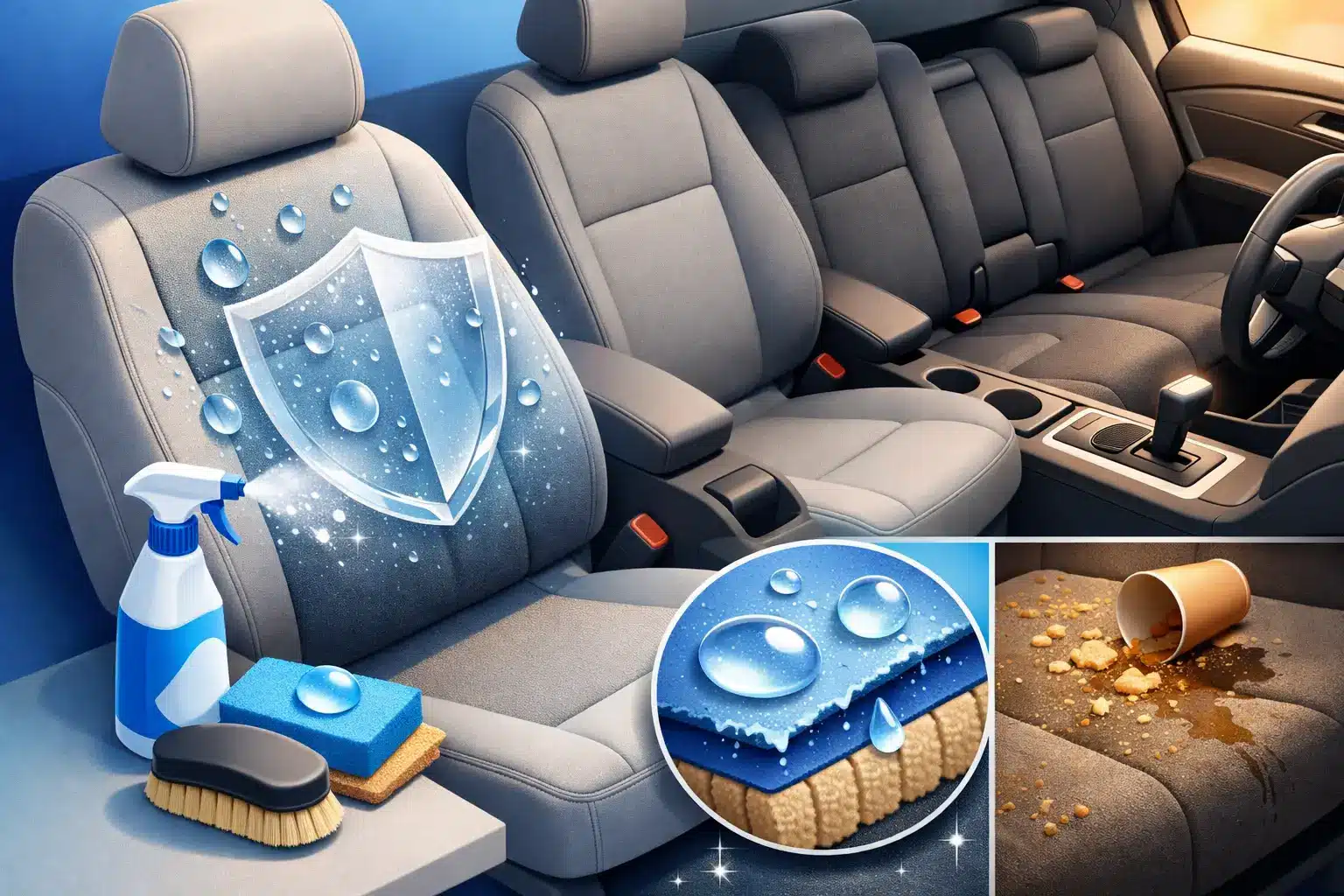
A coffee cup tips during the morning commute. A child drops a snack in the back seat. Rain-soaked shoes leave marks on the carpet after a busy Maryland afternoon. Those moments are part of real life, which is why fabric protection can make such a difference for the inside of your car. It gives your seats and carpets extra help against the spills, dirt, and daily use that can make a vehicle feel worn out fast.
For many drivers, a clean interior is more than a nice extra. It is the feeling you get when you open the door, settle into the driver’s seat, and know your car is ready for the next school run, client meeting, weekend trip, or rideshare shift. When your car looks good, you feel good.
What Fabric Protection Does for Your Car
Fabric protection is a professional treatment applied to cloth seats, carpet, floor mats, and other fabric surfaces. It is designed to help create a barrier that slows down the absorption of liquids and makes dry debris easier to remove. Rather than soaking in immediately, many fresh spills stay closer to the surface, giving you a better chance to blot them up before they become a lasting stain.
That extra time matters. Soda, coffee, juice, greasy food, makeup, muddy footprints, and pet-related messes can all work their way into untreated fabric. Once a spill reaches the fibers and padding below, removing the stain and odor becomes much more difficult.
A fabric treatment also helps with the everyday buildup you may not notice right away. Dust, crumbs, pollen, and tracked-in dirt can settle into carpet and seat material over time. Protection does not stop your interior from getting dirty, but it can make routine vacuuming and spot cleaning more effective.
Who Benefits Most From Fabric Protection?
Almost any vehicle with cloth upholstery can benefit, but some drivers get especially strong value from the service. Families know how quickly back seats can collect snack crumbs, juice spills, and mystery marks. Commuters spend a lot of time in their vehicles and often eat or drink on the go. Rideshare and delivery drivers need an interior that stays welcoming through frequent passenger traffic.
It is also a smart consideration for people who park outside, travel with pets, or use their SUV for sports gear, work equipment, and weekend errands. In Montgomery County, changing weather can bring mud, wet shoes, road grit, and winter slush into the cabin. Carpet protection will not make those messes disappear, but it can make cleanup less stressful.
Newer vehicles are ideal candidates because protecting clean fabric early is usually easier than trying to restore heavily stained material later. Still, an older car can benefit after a thorough interior cleaning. Once seats and carpets have been deep cleaned, fabric protection can help preserve that fresh, cared-for look.
What Fabric Protection Will Not Do
The best results start with realistic expectations. Fabric protection is not an invisible force field, and it does not mean you can ignore a spill. If coffee sits on a seat for hours, or a greasy substance is rubbed deep into the fabric, staining can still happen. The treatment gives you an advantage, not a free pass.
It also cannot repair existing wear, faded upholstery, burned fabric, torn seams, or stains that have already bonded to the fibers. Those concerns may require deep cleaning, odor removal, targeted stain treatment, or upholstery repair before a protectant is applied.
The good news is that prompt action goes a long way. When something spills, gently blot it with a clean towel rather than scrubbing it into the fabric. Work from the outside of the spill toward the center, and avoid harsh household cleaners that may leave residue or affect the material. If the stain remains, professional interior cleaning is the safer next step.
The Best Time to Apply Fabric Protection
Fabric protection works best on clean, dry surfaces. That is why it pairs naturally with carpet and seat cleaning or a full interior detail. A detailer can vacuum thoroughly, remove embedded debris, clean the fabric, address visible spots, and allow the materials to dry before applying the protectant evenly.
Applying a treatment over dirty seats is not the same as protecting a clean interior. Stains, oils, and grime can interfere with the finish and leave you with less consistent results. If your car has visible staining or lingering odor, start with cleaning rather than trying to cover up the issue.
For a recently purchased vehicle, treatment soon after delivery is a practical way to start off on the right foot. For a vehicle you have owned for years, schedule it after a deep interior refresh. Either approach helps preserve the feel-good experience of getting into a car that looks cared for.
Fabric Protection vs. Leather Care and Ceramic Coating
Different surfaces need different kinds of protection. Fabric protection is intended for cloth upholstery and carpeting. Leather or vinyl seats need products designed to clean, condition, and protect those materials without leaving them overly shiny or slippery.
Ceramic coating serves another purpose. It is generally used to protect exterior painted surfaces and can also be used on certain other exterior materials, depending on the service. It helps support a cleaner-looking finish and easier maintenance outside the vehicle. It does not replace fabric protection inside the cabin.
If your vehicle has a mix of cloth, leather, carpeting, and high-touch interior surfaces, a professional detail can help identify what each area needs. Choosing the right service is more effective than using one product everywhere.
Keeping Treated Seats and Carpet Looking Their Best
After treatment, regular care is simple. Vacuum the interior consistently, especially under seats and along the edges of floor mats where debris gathers. Clean up spills as soon as possible, even if the liquid appears to bead on the surface. The longer any substance remains in contact with fabric, the more likely it is to leave a mark.
Try to avoid saturating seats and carpet with water during at-home cleaning. Too much moisture can travel into the padding, create odors, and take a long time to dry. Gentle spot cleaning is often enough for fresh messes, while larger stains are better handled with professional equipment and techniques.
Protection also needs occasional renewal. How often depends on how the vehicle is used, how often it is cleaned, whether it carries children or pets, and how much traffic the interior gets. A daily rideshare vehicle will likely need more frequent attention than a second car used mainly for short weekend trips.
A Smart Add-On to a Professional Detail
Fabric protection is a practical add-on when you want your interior cleaning to last longer. It makes sense after carpet and seat cleaning, before a family road trip, after buying a vehicle, or when you are preparing to sell or trade it in. A clean, stain-managed interior can make a stronger impression and help a vehicle feel more valuable to the next owner.
At Love My Car Carwash, fabric protection can be part of a larger approach to interior care, from deep vacuuming and carpet cleaning to odor removal and full detailing. The right option depends on your vehicle’s current condition and how you use it every day.
A clean car should fit your life, not create another chore. Give your seats and carpets the support they need, handle spills quickly, and choose professional care when everyday messes need more than a towel and good intentions.