A coffee spill in the cup holder is one thing. Coffee that soaked through a cloth seat, dried into the carpet, and left a lingering odor is another. When comparing interior shampoo versus steam cleaning, the better choice comes down to what is actually living in your vehicle’s fabrics, crevices, and surfaces – and how quickly you need to drive it again.
Both services can make a big difference in how your car looks, smells, and feels. But they do different jobs. Shampooing is usually the stronger option for embedded soil and visible stains in carpet and upholstery. Steam cleaning is especially useful for detailed surface cleaning, hard-to-reach areas, and refreshing many interior materials with very little moisture.
For busy Germantown and Montgomery County drivers, the right service is not always the most intensive one. It is the one that fits your vehicle’s condition, materials, schedule, and goals.
Interior Shampoo Versus Steam Cleaning: The Main Difference
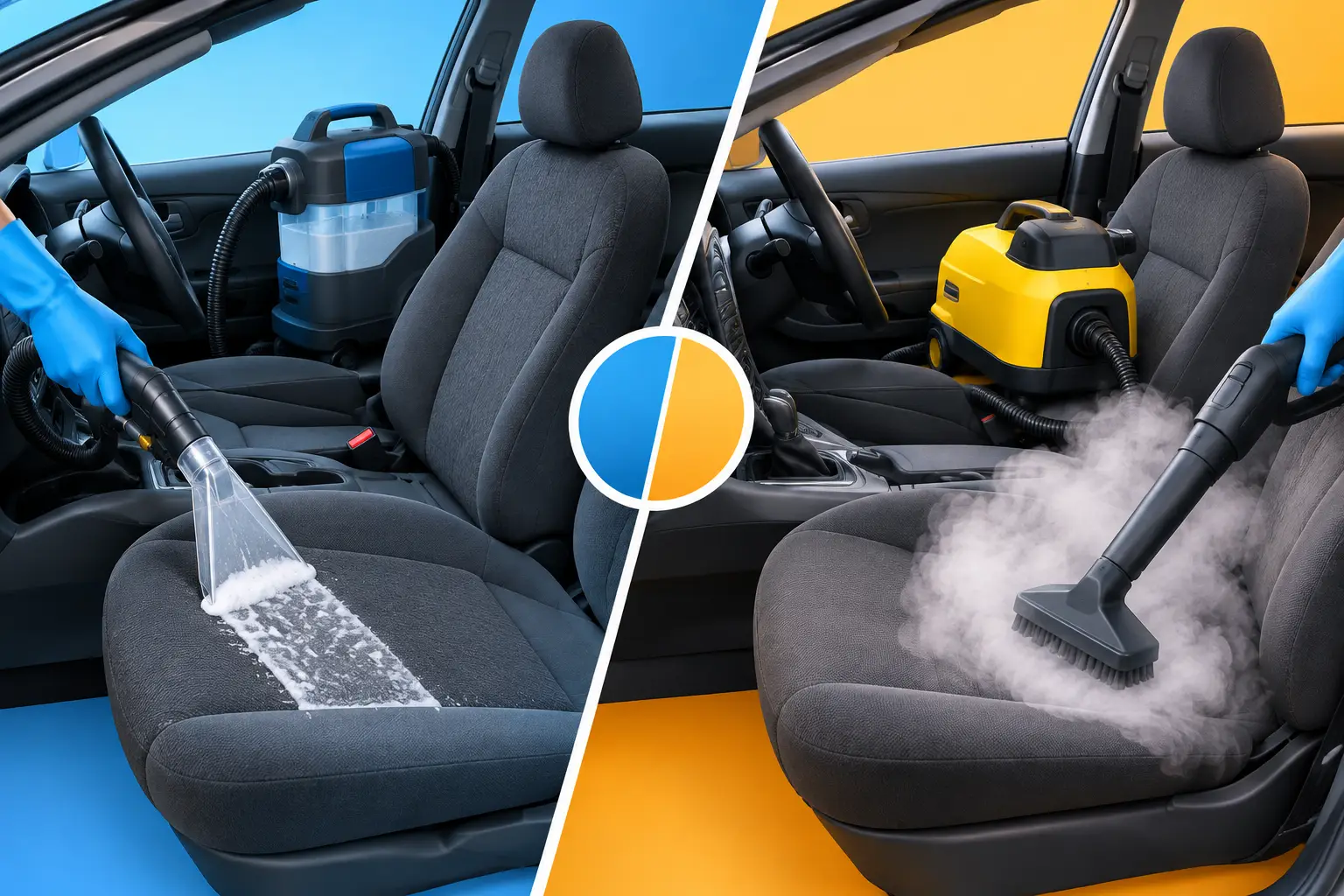
Interior shampooing uses a cleaning solution to loosen dirt from fabric, carpet, and cloth upholstery. A detailer works the product into the affected area and removes the dirty moisture with professional extraction equipment. The process is designed to pull out more than what a vacuum can reach, including tracked-in grime, food spills, residue, and soils that have settled below the surface.
Steam cleaning uses heated vapor and specialized attachments to lift grime from surfaces with limited water use. It is commonly used around vents, cup holders, door panels, dashboard details, seat tracks, trim, and other tight spots where brushes and towels alone may leave buildup behind. Steam can also refresh cloth surfaces, although it is not always the best standalone answer for a deeply saturated stain.
Think of shampooing as a deeper wash for absorbent materials. Think of steam as precision cleaning for surfaces and crevices. A professional interior detail may use both because a family SUV with stained floor mats and sticky cup holders rarely has just one type of mess.
When Interior Shampooing Makes More Sense
Shampooing is often the best fit when the problem is below the visible surface. Cloth seats, carpet, and floor mats hold onto dirt more easily than plastic or vinyl, especially after wet shoes, sports practices, rainy commutes, snack spills, or rideshare passengers.
A shampoo and extraction service is worth considering when you notice dark traffic lanes on carpet, salt residue, dried beverage stains, muddy floor mats, or upholstery that looks dull even after vacuuming. It can also help with odors when the odor source has soaked into fabric. If spilled milk, pet accidents, or food residue remain in the padding, surface wiping will not fully solve the problem.
The trade-off is drying time. Extraction removes a significant amount of moisture, but fabric and carpet may still need time to dry completely. The amount of time depends on the weather, airflow, fabric type, how heavily soiled the interior was, and how much treatment was needed. On a humid Maryland day, a car with heavily cleaned carpeting may take longer to feel fully dry than one cleaned on a bright, low-humidity afternoon.
That does not mean you should avoid shampooing when your car needs it. It simply means planning your appointment around the service. If you have a long commute immediately afterward or need to load kids, work gear, or groceries into the vehicle, ask what drying conditions to expect.
Shampooing is especially helpful for cloth interiors
Cloth upholstery is comfortable and practical, but it absorbs spills quickly. The same is true of carpeted cargo areas, third-row floors, and removable mats. When dirt reaches the fibers, professional extraction can restore a cleaner, more even appearance that ordinary vacuuming cannot deliver.
Shampooing can improve the look of old stains, but no honest detailer should promise that every stain will disappear. Some dyes, grease marks, bleach spots, and long-set spills can permanently alter the material. The goal is meaningful improvement, a cleaner feel, and removal of as much embedded contamination as the fabric allows.
When Steam Cleaning Is the Better Choice
Steam is a smart choice for the areas you touch constantly but may not clean closely enough: steering wheel seams, gear selectors, door pulls, cup holders, console buttons, vents, trim edges, and child-seat-adjacent crevices. These areas collect skin oils, dust, crumbs, makeup, and sticky residue over time.
Because it uses controlled heat and low moisture, steam cleaning can be useful when you want a detailed refresh without soaking the interior. It can loosen grime so it can be wiped away, helping restore a cleaner finish to many hard surfaces. It is also helpful in areas where an extractor cannot reach effectively.
Steam can refresh fabric seats and carpets, but it has limits. A surface may look cleaner after steaming while deep residue remains below. If a seat smells sour after an old spill or the carpet is visibly dark from months of use, shampooing and extraction are generally more appropriate.
Steam also is not a one-size-fits-all tool. Leather, suede, headliners, delicate electronics, screens, aging plastics, and damaged upholstery require careful handling. Excessive heat or moisture can cause problems when used incorrectly. Professional technique matters just as much as the machine.
Steam helps with detail work, not just “sanitizing”
Many people ask whether steam cleaning sanitizes a car interior. Heat can help reduce certain germs on suitable surfaces when applied correctly, but it should not be treated as a blanket health guarantee. Real-world results depend on the temperature at the surface, contact time, material, and cleaning method.
The immediate benefit most drivers notice is simpler: steam helps break up the sticky, dusty buildup that makes an otherwise clean car feel neglected. That fresh, carefully detailed feeling is hard to beat.
What About Odors?
Odor removal depends on the source. This is where choosing between shampoo and steam based only on convenience can lead to disappointment.
For odors trapped in carpet, cloth seating, and floor mats, shampooing with extraction is usually the more useful starting point because it targets the material holding the odor. For a sticky residue in cup holders, vent dust, or grime on hard surfaces, steam may make a real difference. Strong or persistent odors from smoke, mildew, pet accidents, spilled dairy, or water intrusion may require additional odor treatment after the affected surfaces are cleaned.
A clean-smelling car should not rely on fragrance to cover up a problem. Air freshener can be a nice finishing touch, but it cannot replace removing the source.
Choosing the Right Service for Your Vehicle
Start with what you see, smell, and use every day. If your interior has stained cloth, dirty carpets, or soaked-in odors, prioritize shampooing and extraction. If the upholstery is in good condition but your console, trim, vents, and touch points need a close refresh, steam cleaning may be the better fit.
If your car has both issues, a more complete interior detail is often the most efficient choice. Rather than paying attention to one stain while overlooking dirty mats, dusty vents, and grimy door panels, a full service can address the interior as a whole.
Your vehicle type matters, too. A commuter sedan may need occasional carpet extraction after winter weather. A family minivan may benefit from regular attention to seats, cargo carpeting, cup holders, and door panels. Rideshare and delivery drivers may need more frequent refreshes because passengers, packages, and daily miles add up quickly.
At Love My Car Carwash, the best approach is always based on the condition of the vehicle, not a one-size-fits-all promise. A quick cleanup has its place, and so does a deeper appointment when your interior needs real recovery.
How to Keep Results Looking Better Longer
After shampooing or steam cleaning, a few habits can extend that feel-good result. Shake out or clean mats regularly, take spills seriously before they dry, and avoid leaving damp items in the vehicle overnight. If you use the car for kids’ activities, pets, commuting, or deliveries, a quick weekly reset can prevent a small mess from turning into a major detailing job.
Most of all, do not wait until the interior feels beyond saving. A professional clean is easier on the materials when dirt and spills have not had months to settle in. Whether your car needs deep extraction, careful steam work, or both, getting back into a clean vehicle can make even an ordinary drive feel better.