A clean interior does more than make the morning commute feel better. It protects the surfaces you touch every day, helps preserve resale value, and makes school drop-offs, client rides, and weekend errands more comfortable. The best ways to protect your vehicle interior are not complicated, but they do require consistency – especially with Maryland heat, rainy days, winter road salt, and real family life happening in the car.
You do not need to treat your vehicle like a museum piece. The goal is to stop small messes, sun exposure, and ground-in dirt from turning into permanent stains, odors, faded trim, or worn carpet. A few smart habits, plus occasional professional care, can keep your cabin looking and feeling good for the long haul.
Best Ways to Protect Your Vehicle Interior Every Day
1. Use quality floor mats and clean beneath them
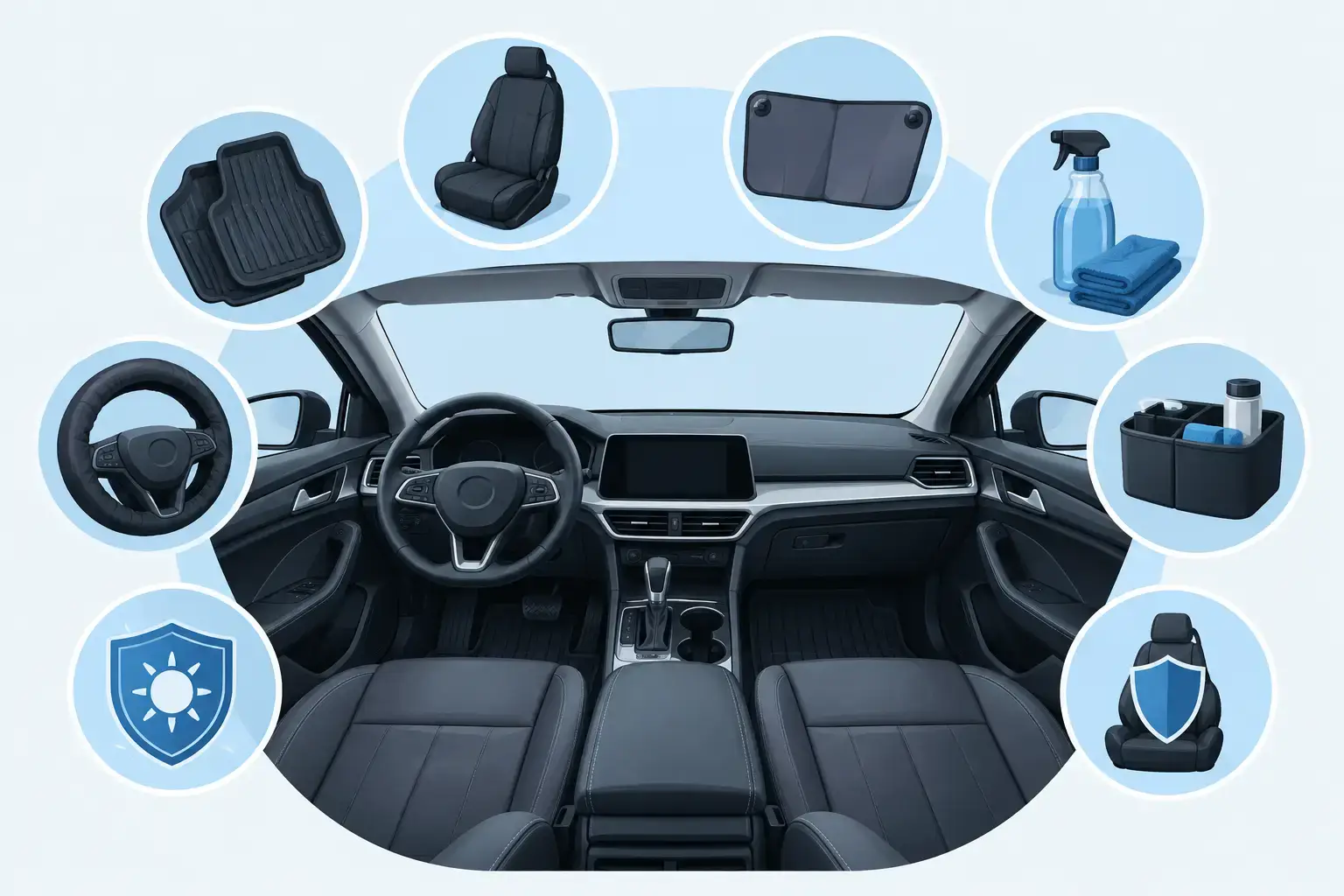
Your floors take the hardest hit. Shoes carry in mud, gravel, pollen, spilled coffee, pet hair, and, during winter, slush and road salt. Factory carpet mats are fine for light use, but all-weather mats with raised edges provide much better coverage for busy families, commuters, and anyone who parks outdoors.
The important part is what happens underneath. Remove the mats regularly, shake them out, and vacuum the carpet below. Moisture trapped under a mat can lead to lingering odors and, in severe cases, damage to the carpet backing. After a snowy or rainy week, give the footwells extra attention instead of waiting for the dirt to dry into the fibers.
2. Keep the sun from fading your dash and upholstery
Summer heat can be tough on a parked vehicle, even on a quick stop at the store. UV exposure gradually dries out vinyl, fades dashboards, weakens leather finishes, and can make plastic trim look dull. A windshield sunshade is one of the simplest, most affordable ways to cut down on direct sunlight.
Whenever practical, park in a garage, shaded space, or with the windshield facing away from the strongest afternoon sun. If your vehicle has leather or vinyl seating, use products designed for that material rather than a household cleaner. The wrong product can leave a slippery finish, attract dust, or strip protective coatings.
For long-term protection, professional interior detailing can clean and condition these surfaces without the guesswork. It is especially useful when a dashboard already looks chalky or leather seats are beginning to feel dry.
3. Treat spills right away, but do not over-scrub them
A fresh spill is much easier to remove than a stain that has sat through a hot afternoon. Keep a small microfiber towel or absorbent cloth in the console or door pocket. When coffee, juice, sauce, or melted snow hits a seat or carpet, blot it promptly. Press down to lift moisture rather than rubbing it deeper into the fabric.
For water-resistant leather or synthetic upholstery, wipe the spill gently with a clean, damp cloth and dry the area afterward. For cloth seats and carpet, avoid soaking the area with random cleaners. Too much liquid can spread the stain, leave a residue, or create a damp spot that smells musty later.
If the spill has color, grease, milk, or an odor, professional carpet and seat cleaning is often the better move. Quick action helps, but deep extraction is what removes residue hiding below the surface.
4. Make food rules that fit your real life
For many drivers, a strict no-food policy is not realistic. Families eat between activities, commuters grab breakfast in the car, and delivery drivers may spend most of the day behind the wheel. Instead of aiming for perfection, create a system that limits the mess.
Use cups with secure lids, keep snacks in containers, and place a small trash bag or reusable car bin within reach. Empty it often. Crumbs may seem harmless, but they work their way into seat tracks and carpet fibers, where they can attract pests and contribute to odors.
If kids regularly ride in the back, consider seat-back organizers and washable seat protectors. They are not a replacement for cleaning, but they can catch dirt from shoes, markers, and snack debris before it reaches the upholstery.
5. Vacuum before dirt becomes embedded
Vacuuming is one of the most effective ways to preserve carpet and cloth upholstery. Sand, grit, and salt crystals are abrasive. Every time someone shifts their feet or slides into a seat, that debris can wear on the fibers.
A quick vacuum every couple of weeks makes a noticeable difference, particularly around the driver’s footwell, under child seats, between seat cushions, and in the cargo area. If you have a dog, vacuum sooner and more often. Pet hair is easier to remove before it becomes woven into fabric.
This is also a good time to check for coins, wrappers, damp towels, and forgotten sports gear. A tidy cabin is easier to protect because you can actually see the surfaces that need attention.
6. Protect seats based on their material
Not every seat needs the same care. Cloth seats benefit from regular vacuuming and prompt spot cleaning. A fabric protector may help resist minor spills, but it will not make a seat stain-proof. Reapply it only as directed and let the upholstery dry fully before use.
Leather seats need gentle cleaning and conditioning to help maintain their finish and flexibility. They should not feel greasy after treatment. If they do, too much product was used or the product was not right for the material. Remember that many newer vehicles use coated leather, leatherette, or vinyl, so check the owner’s manual if you are unsure.
For vehicles that carry children, pets, work equipment, or rideshare passengers, fitted seat covers can be a practical trade-off. Choose covers that are compatible with your vehicle and do not interfere with side airbags. They add a layer of protection, but they still need washing and the original seats still need periodic cleaning.
7. Control odors before they settle in
Air fresheners can make a car smell nicer for a few days, but they do not remove the source of an odor. Wet carpet, spilled drinks, fast-food containers, gym bags, smoke, and pet accidents all need to be addressed directly.
Start by removing the source and drying any damp areas completely. Replace the cabin air filter on schedule, especially if your air conditioning smells musty when it first turns on. Clean out the trunk and under-seat storage areas too. Odors often travel through the cabin, which makes the source harder to spot.
When the smell persists, odor removal service is worth considering. Professional treatment can target odors that have settled into carpet, headliners, vents, and upholstery instead of just covering them up.
8. Schedule deeper care before damage looks obvious
Routine upkeep prevents most problems, but certain situations call for more than a wipe-down and a vacuum. Salt-stained carpet, sticky cup holders, pet hair, faded trim, stained seats, and lingering odors all become harder to correct the longer they are left alone.
A full-service wash helps keep day-to-day debris under control, while an interior detail is the right choice when your vehicle needs focused cleaning and restoration. At Love My Car Carwash, options such as deep vacuuming, carpet and seat cleaning, odor removal, and express detailing can help drivers choose care based on what their vehicle actually needs.
There is a budget consideration here. You may not need a complete detail every month, but waiting until the interior feels beyond saving usually means more time and more intensive work. Many drivers do well with regular washes and vacuuming, then book a deeper interior service seasonally or after a road trip, winter, or a particularly busy stretch with kids or pets.
A Simple Interior Protection Routine That Sticks
The best routine is the one you will actually keep. Once a week, remove trash and wipe obvious spills. Every few weeks, vacuum floors, seats, and cargo areas, then clean the mats. Add a sunshade when the weather heats up, and do not let wet items stay in the vehicle overnight.
After winter, after beach trips, and before selling or trading in your vehicle, schedule more thorough attention. These moments are when salt, sand, pet hair, and hidden stains tend to show themselves.
Your vehicle works hard for your household. Give the interior the same care you give the exterior, and every drive can stay a little more comfortable, a little more inviting, and a lot more feel-good.