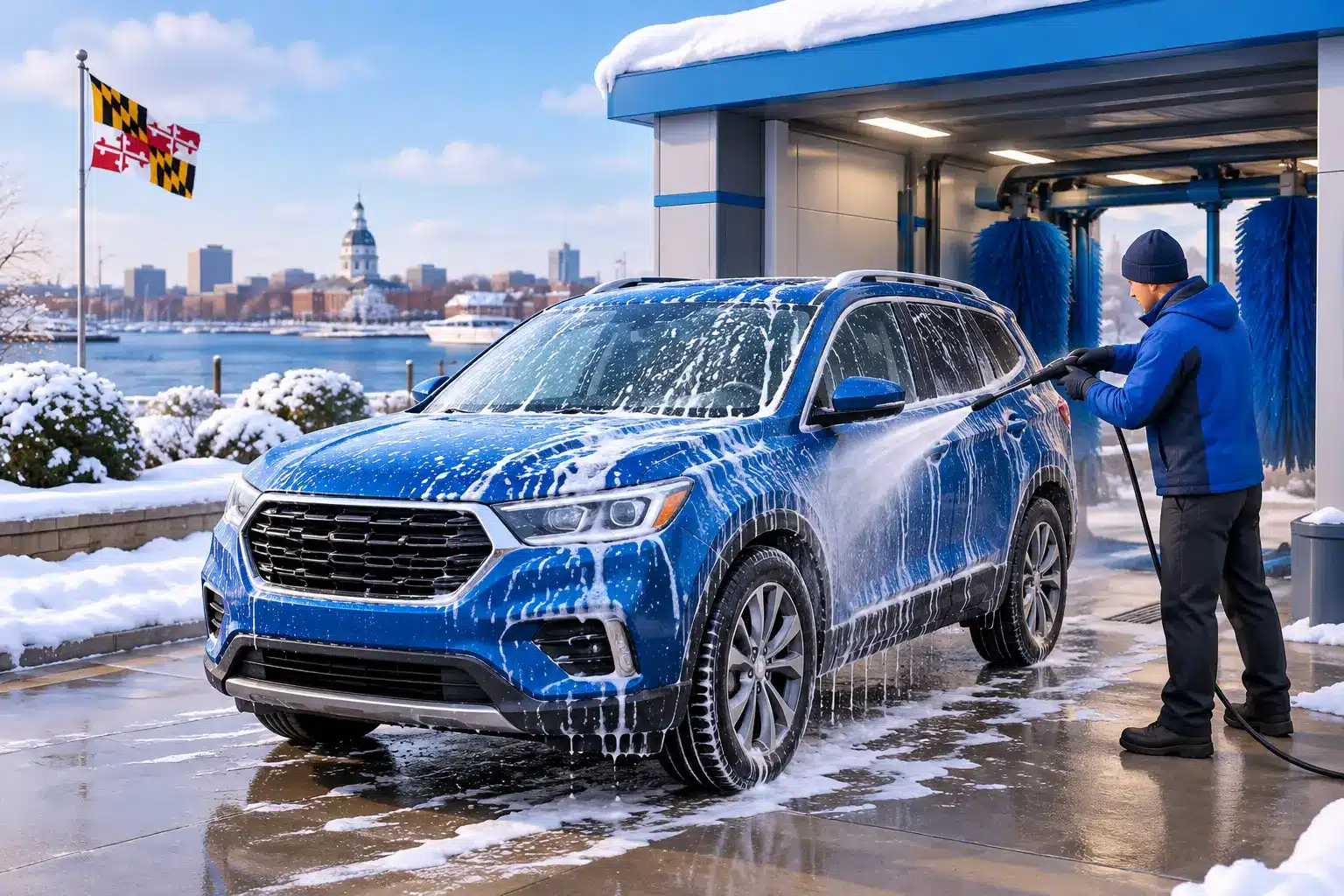
Road salt has a way of finding every place you cannot easily see: behind the wheels, along the rocker panels, under the bumpers, and around door seams. This winter vehicle wash guide helps Maryland drivers stay ahead of that grime without turning car care into another weekend chore. A clean car is easier to see out of, more comfortable to drive, and better protected from the messy mix of salt, slush, sand, and road film that comes with a Montgomery County winter.
Why Winter Washing Is More Than a Good Look
A bright, clean finish feels great when the sky is gray for days. But winter washing also supports the parts of your vehicle that take the biggest beating. Road salt and de-icing chemicals cling to paint, wheels, wheel wells, and the undercarriage. Left there for weeks, that buildup can hold moisture against metal and contribute to corrosion.
The issue is not just salt. Dirty windows scatter headlights at night, which can make glare worse in rain or snow. Grimy mirrors and backup cameras reduce visibility. Snow boots, wet coats, and spilled coffee can turn a clean interior into a damp, stale-smelling space quickly. A regular wash gives you a little more confidence every time you get behind the wheel.
How often you wash depends on the weather and how much you drive. If roads have been treated heavily, a wash every one to two weeks is a sensible goal. Commuters, delivery drivers, and families making daily school and activity runs may need one sooner. If your vehicle has stayed parked during a cold snap, you can usually wait until the roads are dry enough to avoid picking up fresh salt on the drive home.
Winter Vehicle Wash Guide: Pick the Right Day
You do not need perfect weather to wash your car, but timing makes a difference. Aim for a day when temperatures are above freezing, especially if you are having the interior cleaned or want door jambs, mirrors, and seals to dry thoroughly. A professional wash is often the easier choice during cold weather because equipment, water temperature, and drying steps are designed for the job.
Try to wash after the roads have dried following a storm or treatment cycle. Washing immediately before another round of snow, freezing rain, or salted-road driving is not wasted effort, but it may not give you the clean, feel-good result you want for long. When storms arrive back to back, focus on removing the salt rather than waiting for a spotless forecast.
Avoid washing a vehicle that is covered in thick ice. Scrape loose ice and snow first, and do not force frozen wipers, mirrors, or door handles. If a door seal is frozen, pulling hard can tear the rubber. A few patient minutes can prevent an expensive annoyance.
Focus on the Areas Salt Hits Hardest
An exterior wash should clean more than the center of the hood and doors. The dirtiest winter areas are usually low on the vehicle, where spray from the road collects. That means wheels, wheel wells, lower door panels, rocker panels, bumpers, and the underbody deserve attention.
A thorough rinse is the first priority. It loosens abrasive grit before wash material touches the paint. Then, soap and gentle cleaning remove the traffic film that makes a vehicle look dull even after the visible mud is gone. High-quality wash services also help clear buildup from the places a home hose may not reach effectively.
Your wheels need special attention in winter. Brake dust, salt, and slush can bake onto wheel surfaces, particularly when driving is frequent. Keeping wheels clean helps preserve their appearance and makes it easier to spot concerns such as a damaged tire, low tread, or a missing valve cap.
Undercarriage cleaning matters most after repeated salt exposure. You may not see this area, but it is where road chemicals can collect around suspension components, brackets, and other metal surfaces. It does not need to be an anxious, every-day task. It simply needs to be part of regular winter care.
Keep Windows, Lights, and Cameras Clear
A clean windshield is a safety feature, not a finishing touch. Winter grime creates a hazy layer that daytime sun and oncoming headlights can turn into glare. Clean both the outside and inside of the glass, since interior film from heat, moisture, and everyday use can be just as distracting.
Check washer fluid often and use a formula rated for freezing temperatures. Plain water can freeze in the reservoir or on the windshield, leaving you with a bigger problem during a drive. Replace worn wiper blades before they begin streaking badly. If blades are stuck to the windshield after a freeze, loosen them carefully rather than switching them on.
Wipe headlights, taillights, side mirrors, sensors, and backup cameras whenever you wash. Modern safety systems can be less reliable when their cameras or sensors are coated in salt spray. Clear lenses also help other drivers see you sooner in low light, rain, and snow.
Do Not Let Winter Take Over the Interior
The inside of your vehicle works hard in winter. Floor mats catch slush, sand, and salt from boots. Upholstery absorbs moisture from coats and umbrellas. Crumbs and dirt seem to multiply during long commutes and holiday errands.
Start by removing trash and shaking out removable mats. Vacuuming regularly keeps sand and grit from being ground into carpet fibers. If mats are heavily soiled, a deeper cleaning can help remove the residue that leaves white salt marks and damp spots behind. Let mats dry as fully as possible before putting them back in the vehicle.
Pay attention to odor, too. A musty smell is often a sign that moisture has been trapped in carpet, seats, or floor mats. Cracking windows briefly on a dry day may help, but persistent odors typically need professional interior cleaning rather than another air freshener. Odor removal works best when the source is cleaned, not covered up.
For families, a full-service interior wash can be a major time saver. It restores the cabin after muddy soccer fields, school drop-offs, snack spills, and wet winter gear, while giving you one less thing to handle after a busy week.
Add Protection When It Fits Your Vehicle
A winter wash removes what is already on the vehicle. Protective services make it harder for grime to cling and help preserve the finish between visits. The best option depends on your vehicle, budget, and how long you plan to keep it.
A wax treatment adds shine and a layer of protection that can make water bead and make routine cleaning easier. Clay bar treatment followed by wax is a strong choice when paint feels rough or looks dull from bonded contamination. For car owners seeking longer-term protection, ceramic coating may be worth considering. It is a larger investment and requires proper preparation, but it can support easier maintenance and a consistently polished appearance.
No protective service makes a vehicle immune to winter salt. It reduces the workload, not the need for washing. Think of it as an extra layer of support for a vehicle that faces regular commuting, outdoor parking, or frequent road trips.
Make Winter Care Easy to Keep Up With
The best wash schedule is the one you will actually follow. If winter has your calendar packed, an unlimited wash membership can make regular exterior care simple. You can stop in after a salt-heavy commute, before a weekend trip, or whenever the car no longer feels good to drive. For vehicles that need more than an exterior refresh, full-service cleaning and express detailing can bring the cabin back under control without spending your Saturday doing it yourself.
At Love My Car Carwash, the goal is not to make winter car care complicated. It is to give local drivers clear choices, from a quick exterior wash to deeper cleaning and protective detail work, so their vehicles look cared for through every season.
The next time salty spray dulls your doors or your windshield starts to haze at sunset, treat it as a simple reminder: a clean car changes the whole drive. When your car looks good, you feel good – even when the forecast does not.