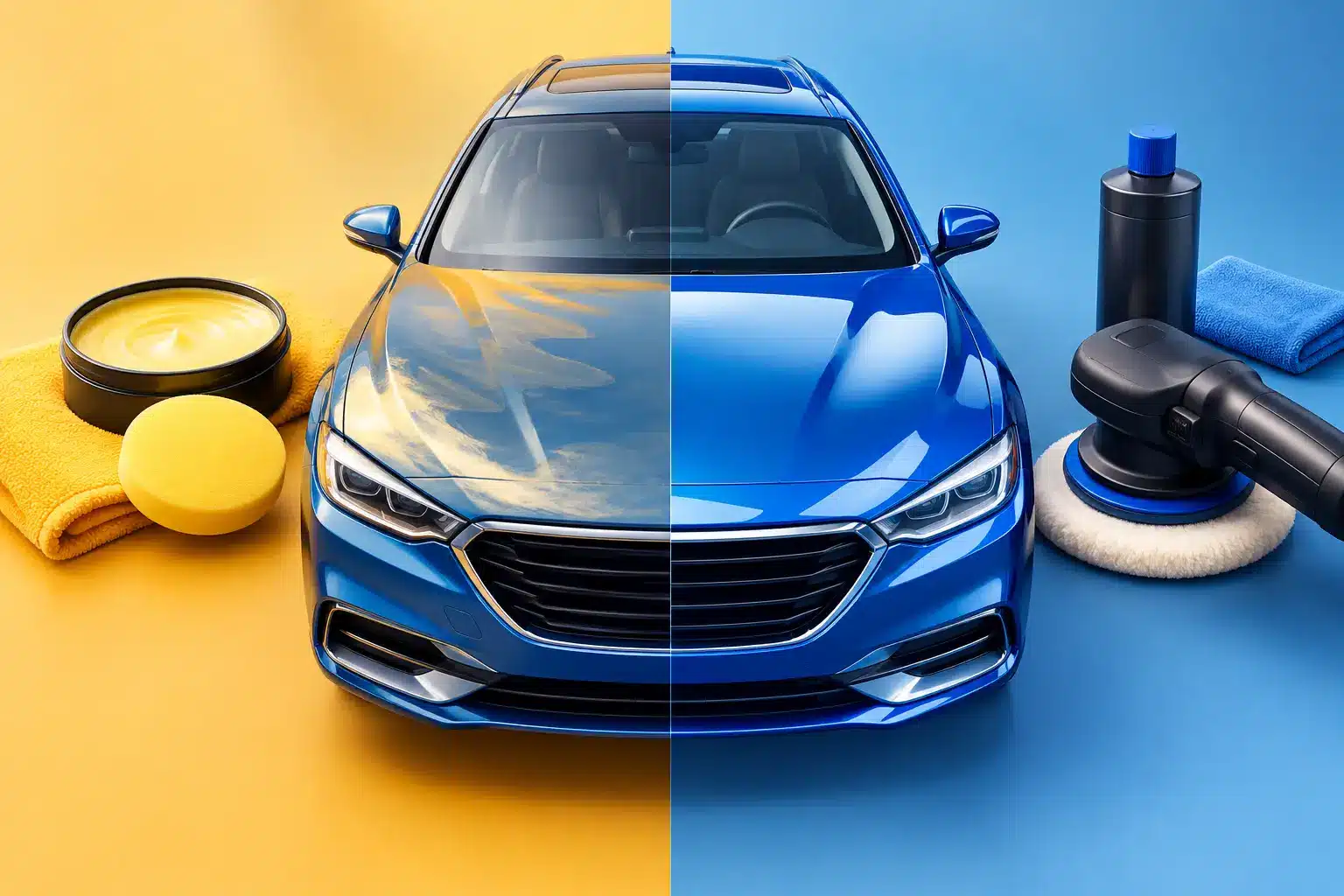
That dull, slightly rough feeling on your car’s paint is not always a sign that it needs wax. Sometimes the shine is hiding light scratches, water spots, swirl marks, or oxidation that wax alone cannot fix. When it comes to wax versus polish, the real question is whether your vehicle needs protection, correction, or both.
For busy drivers around Germantown and Montgomery County, knowing the difference can save time, money, and frustration. A clean car feels great to drive, but the right finish care helps it stay that way through pollen, summer sun, road salt, rain, and daily commuting.
Wax Versus Polish: The Key Difference
Wax protects your paint. Polish improves the condition and appearance of the paint itself.
A quality wax leaves a thin protective layer on the exterior. That layer helps water bead up, adds gloss, and gives dirt, grime, tree sap, and other contaminants less opportunity to cling to the surface. It is a practical finishing step for a vehicle whose paint already looks smooth and healthy.
Polish is different because it works on the paint surface. It uses fine abrasives and oils to reduce the appearance of light defects, such as faint swirl marks from automatic washing, hazy paint, light scuffs, and mild oxidation. A polish can restore clarity and depth, especially on darker colors where every small mark seems to show.
Think of polish as the step that brings back the shine, while wax helps preserve it. They are not competing services. In many cases, they work best together.
When Your Car Needs Wax
Wax is a smart choice when your paint looks good but could use added gloss and a layer of protection. If water no longer beads on the hood, the finish looks less lively after washing, or your car spends a lot of time outdoors, waxing is often the right next move.
Maryland weather gives vehicle exteriors plenty to deal with. Spring pollen can coat every panel. Summer heat and UV exposure can dry out the look of the finish. Fall leaves, bird droppings, and tree sap can become stubborn if they sit too long. Winter road grime and salt add another layer of stress. Wax does not make paint invincible, but it gives contaminants less direct contact with the clear coat and makes routine washing easier.
Wax is especially helpful for drivers who already maintain a regular wash schedule. A clean vehicle lets the wax bond and perform better, and continued washing helps preserve that fresh, glossy look between more complete care appointments.
What Wax Can and Cannot Do
Wax can deepen color, improve shine, and create satisfying water beading. It can also make the surface feel smoother after proper preparation. Those results are why a freshly waxed car has that unmistakable feel-good finish.
What wax cannot do is remove scratches, correct etched water spots, repair peeling clear coat, or eliminate deep oxidation. It may temporarily make minor imperfections less noticeable because the extra shine reflects light differently, but the marks are still there. If the paint looks cloudy or heavily swirled after a wash, applying wax first may protect the surface without giving you the improvement you hoped to see.
When Your Car Needs Polish
Polish is the better choice when clean paint still looks tired. You may notice that the car looks dull in direct sunlight, that circular marks show around the hood and trunk, or that the paint has lost its rich color. These are common signs that light paint correction could help.
Polishing is particularly useful before waxing because it creates a clearer, smoother surface for the wax to protect. The result is not just more shine. It is a cleaner reflection, richer color, and a finish that looks more cared for from every angle.
A professional polish is not the same as simply rubbing on a store-bought product in a driveway. The correct approach depends on the vehicle’s paint condition, color, age, and clear-coat thickness. Too much abrasion, too often, is not good for paint. That is why a careful assessment matters, especially if you own a newer vehicle, a dark-colored vehicle, or a car with visible paint concerns.
What Polish Can and Cannot Do
Polish can reduce the appearance of light scratches, swirl marks, haze, and mild oxidation. It can improve paint clarity and help a vehicle look noticeably brighter before protection is applied.
It cannot fix deep scratches that catch a fingernail, chipped paint, dents, rust, or clear-coat failure. Those issues may need touch-up paint, body repair, or more specialized restoration. Honest expectations matter here. Good detailing can create a dramatic improvement, but it should never be sold as magic.
The Best Order: Wash, Prepare, Polish, Then Wax
If your car needs both correction and protection, the order matters. Start with a thorough wash to remove loose dirt and road film. Next, remove bonded contamination if needed. This is where a clay bar treatment can make a major difference.
Even a freshly washed vehicle can feel rough because tiny particles from brake dust, industrial fallout, road grime, and environmental debris have bonded to the paint. A clay bar safely lifts much of that contamination, leaving the surface smoother and better prepared for polishing or waxing.
After preparation, polish comes before wax. Polishing after waxing would remove the protective layer you just applied. Once the paint has been polished to the desired level of clarity, wax can be applied as the protective finishing touch.
For many vehicles, a clay bar and wax treatment is a great refresh when the paint feels rough but does not have significant visible defects. When swirl marks and dullness are the bigger concern, a polish followed by wax is usually the more rewarding route.
How Often Should You Wax or Polish?
Waxing frequency depends on the product, where the vehicle is parked, weather exposure, and how often it is washed. Many drivers benefit from a fresh wax a few times a year, particularly before winter and after the harshest part of winter has passed. A car that lives outside, drives long distances, or regularly encounters construction dust, sap, or bird droppings may need attention more often.
Polishing should be less frequent. Because polish refines the paint surface, it is generally something to do when the finish shows noticeable dullness or light defects, not automatically with every detail. For a well-maintained vehicle, an occasional professional polish can be enough to keep the paint looking its best.
Ceramic coating is another option for owners seeking longer-lasting protection. It is not a replacement for washing, and it does not make a car scratch-proof. But when properly applied to well-prepared paint, it can offer durable protection, strong water behavior, and easier maintenance. The best choice depends on your budget, your expectations, and how long you plan to keep the vehicle.
Choose Care Based on What You See and Feel
Run clean fingers lightly over the paint after washing. If it feels rough but still looks bright, clay and wax may be all it needs. If it feels smooth but looks hazy, swirled, or faded, polishing may deliver the bigger visual change. If it is rough and dull, the vehicle may benefit from preparation, polish, and protection as part of a more complete detail.
Also consider your routine. A family SUV handling school drop-offs, sports gear, and weekend errands faces different wear than a garage-kept weekend car. Rideshare and delivery drivers may prioritize regular washing and periodic protection to keep their vehicles welcoming for passengers. There is no one-size-fits-all schedule, only the care level that makes sense for how you drive and what you want to see when you walk back to your car.
At Love My Car Carwash, professional exterior care can be tailored to the condition of your vehicle, from a hand-applied wax to clay bar treatments and more complete detailing. The goal is straightforward: help your car look cared for without making the process complicated.
The next time your vehicle looks a little less than its best, do not assume wax is the answer by default. Look closely at the paint, feel the surface, and choose the service that matches what your car is telling you. When your car looks good, you feel good – and a little thoughtful care can make every drive feel better.